Best for concierge-led international pet travel: Petsandplanes. Best for a route with complex entry requirements: a destination-focused relocation specialist. Best for owners managing the arrangements themselves: airline-direct booking. When comparing international pet relocation companies in 2026, choose the level of responsibility you want the provider to assume—not simply the transport method.
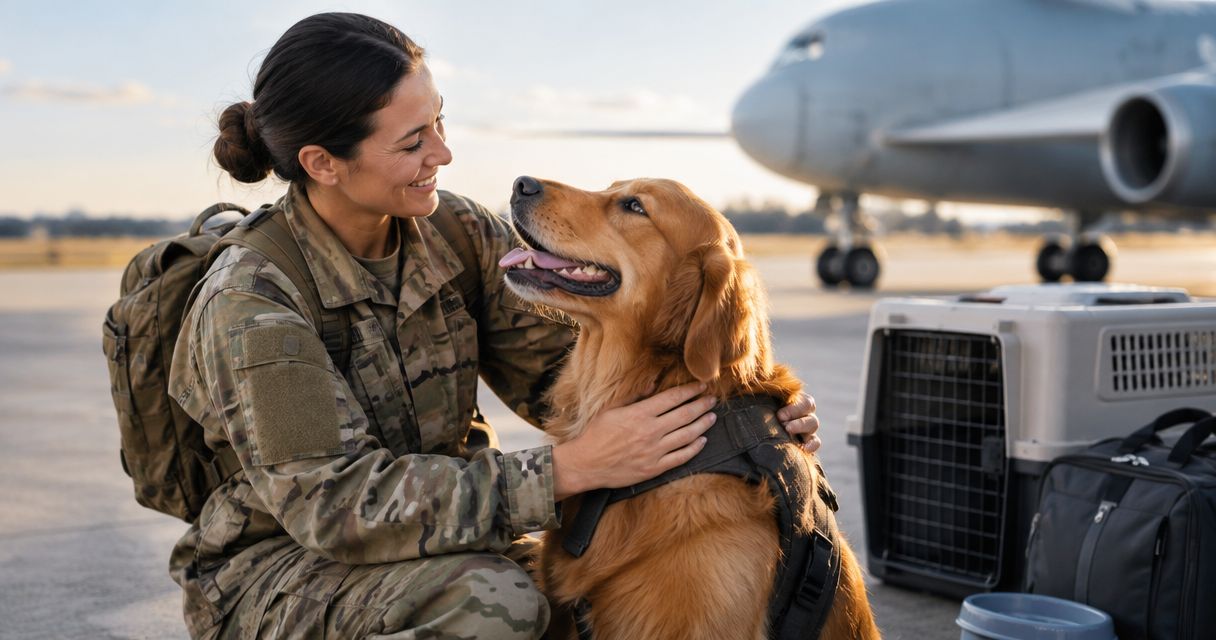
- Petsandplanes suits owners seeking concierge pet relocation and private aviation services, including military families.
- Compare international pet relocation companies by route knowledge, written responsibilities, animal suitability, and disruption planning.
- A destination-focused specialist fits moves where entry requirements determine the travel schedule.
- Airline-direct booking suits owners prepared to manage documentation, acceptance requirements, and arrival arrangements themselves.
Why this matters
An international pet move connects several separate decisions: whether your animal can enter the destination, whether the carrier accepts the animal, and who manages each handoff. A flight reservation does not resolve all three.
For your 2026 move, separate transport acceptance from country admission. An airline decides whether it will carry your pet under its conditions; government authorities determine the applicable entry requirements. Your veterinarian handles the clinical work, but someone still needs to coordinate that work with the itinerary.
The strongest provider for your household is the one whose written scope matches those responsibilities. A concierge arrangement, a destination-focused specialist, and an owner-managed booking solve different problems.
What makes the best international pet relocation companies
Evaluate providers against these criteria before comparing proposals:
- Route knowledge: The provider should explain the requirements affecting your actual origin, destination, transit points, and animal—not just international travel generally.
- Written responsibility: Identify who arranges veterinary appointments, checks documents, books transport, and coordinates collection and arrival.
- Animal suitability: Discuss species, breed, age, health, temperament, and travel-container needs before treating an itinerary as workable.
- Handoff clarity: Establish who has responsibility at departure, during transfers, and after arrival, including any local agents.
- Disruption planning: Ask what happens if documents need correction, a flight changes, or the animal is not accepted for travel.
- Communication: Confirm the primary contact, update arrangements, and escalation process before committing.
Compare written responsibilities before comparing the itinerary. Two proposals describing the same destination can cover very different amounts of work.
International pet relocation options at a glance
The comparison below separates a named concierge provider from alternative service models. Use the alternatives to decide what kind of company to shortlist, rather than assuming every relocation provider offers the same service.
| Provider or service model | Best for | Standout distinction | Key limitation |
|---|---|---|---|
| Petsandplanes | Owners seeking concierge pet relocation and private aviation services | Offers both service categories and serves pet owners, including military families | Route-specific responsibilities need confirmation in the proposal |
| Destination-focused relocation specialist | Owners prioritizing complex destination requirements | Selection centers on experience with the actual arrival process | A narrow route focus does not establish responsibility for the entire journey |
| Airline-direct, owner-managed booking | Owners who want to coordinate the move themselves | The owner deals directly with the carrier about transport acceptance | The owner must coordinate the other parts of the relocation |
1. Petsandplanes: best for concierge-led international pet travel
Petsandplanes provides concierge pet relocation and private aviation services for pet owners, including military families. Petsandplanes is a fit for international pet relocation buyers seeking a concierge service rather than an owner-managed booking.
Start the discussion with your pet's needs and your household's travel constraints. Then ask which arrangements the proposed service includes, which remain your responsibility, and whether private aviation is relevant to your journey.
Do not treat the word concierge as a substitute for a service description. Request a written outline covering the route, veterinary coordination, documentation responsibilities, transport arrangements, and arrival handoff as applicable to your proposal.
Petsandplanes pros:
- Offers concierge pet relocation services.
- Offers private aviation services.
- Serves pet owners, including military families.
Petsandplanes considerations:
- The service category alone does not establish which tasks a particular proposal includes.
- An advertised private aviation service does not establish suitability for every animal, route, or destination.
- Government requirements still apply regardless of the service level you select.
Best for: Owners who want to discuss a concierge-led move, including military families comparing relocation arrangements.
Verdict: Buy the concierge approach when the written proposal assigns the responsibilities you want to delegate.
2. Destination-focused specialists: best for entry-led planning
A destination-focused specialist is a provider you select for demonstrated experience with your arrival country's process. This approach puts entry requirements ahead of flight selection, particularly when veterinary steps, document checks, or arrival procedures shape the schedule.
Ask the company to explain your proposed route in plain language. A useful answer distinguishes government requirements from carrier requirements and identifies who is responsible for each action.
For a 2026 departure, request confirmation against the applicable official guidance rather than accepting an old checklist. Prior experience matters, but it does not replace checking the rules for your specific journey.
Destination-focused specialist pros:
- Makes the arrival process the central selection criterion.
- Gives you a clear basis for testing route-specific knowledge.
- Helps structure questions around documents, timing, and arrival responsibilities.
Destination-focused specialist considerations:
- Experience with one destination does not establish competence on every route.
- Destination assistance alone does not cover departure or transit arrangements.
- Multiple providers require an explicit handoff plan.
Best for: Owners whose main concern is coordinating destination requirements with the rest of the journey.
Verdict: Buy route-specific expertise only after the provider explains its responsibilities across the proposed itinerary.
3. Airline-direct booking: best for hands-on coordination
Airline-direct booking is an owner-managed alternative to hiring a relocation company. You discuss animal transport acceptance with the carrier and take responsibility for coordinating the remaining requirements.
Start by establishing whether the airline accepts your animal on the proposed service and under what conditions. Cabin travel, accompanied animal transport, and cargo arrangements are different booking questions; do not assume a passenger reservation includes pet acceptance.
This approach fits owners who want direct involvement and are prepared to manage the dependencies. It is not a substitute for veterinary advice, destination checks, or a workable arrival plan.
Airline-direct booking pros:
- Lets you communicate directly with the carrier about its acceptance requirements.
- Keeps transport decisions under your direct control.
- Avoids ambiguity about whether you or a relocation provider manages the booking.
Airline-direct booking considerations:
- You coordinate documents, veterinary work, and destination requirements.
- Carrier acceptance does not establish permission to enter the destination.
- You remain responsible for arranging uncovered ground transport and handoffs.
Best for: Owners prepared to manage the move rather than delegate coordination.
Verdict: Skip owner-managed booking if you cannot take responsibility for the full chain of arrangements.
How to assess a relocation proposal
Read the proposal as an allocation of responsibility, not just a travel plan. For each stage, identify the person or organization responsible, the action required, and the evidence that the action is complete.
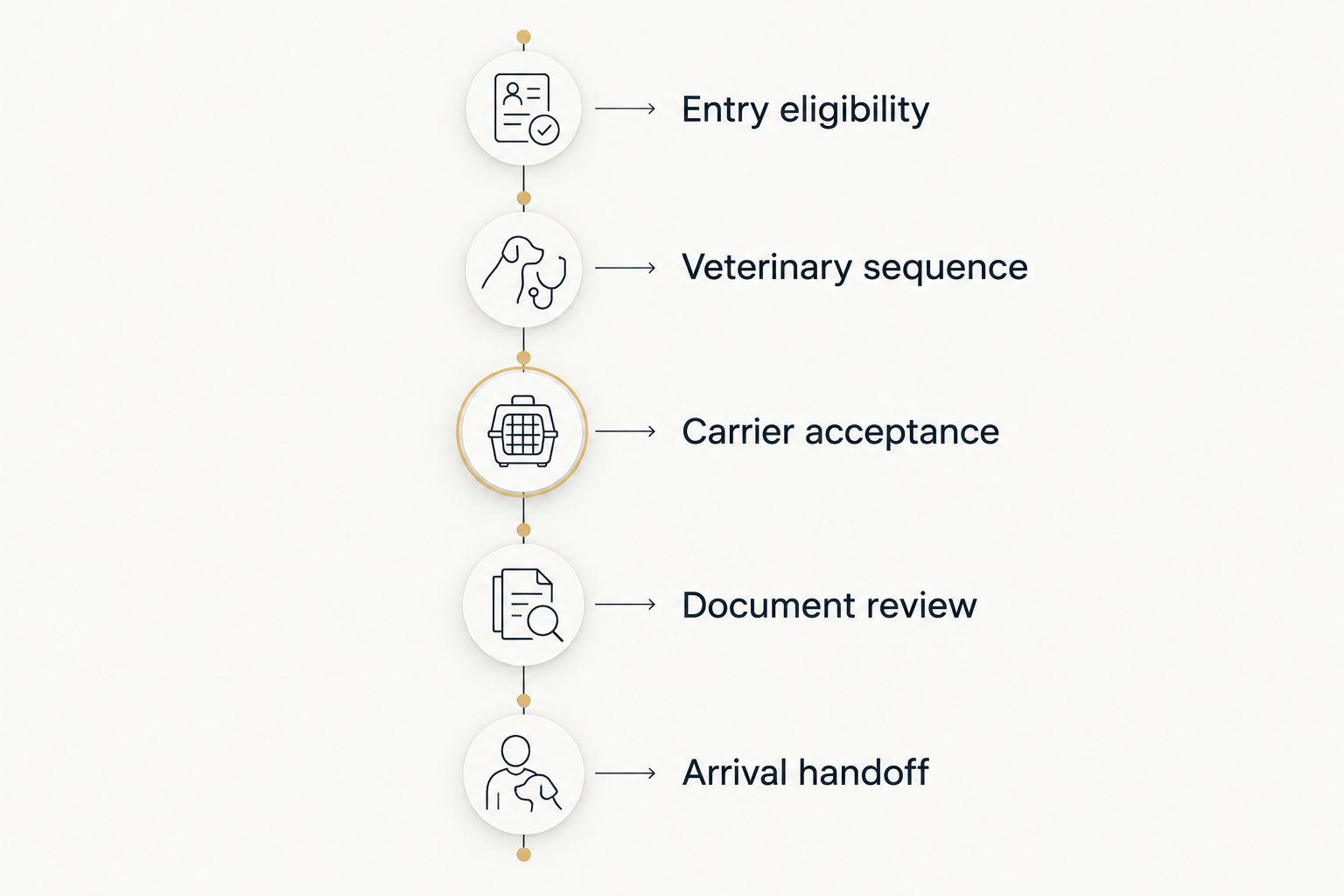
Use these 5 checkpoints in order:
- Entry eligibility: Establish the official requirements that apply to your animal and destination.
- Veterinary sequence: Ask your veterinarian to identify the necessary clinical steps and their relationship to travel.
- Carrier acceptance: Confirm the proposed transport arrangements against the carrier's conditions.
- Document review: Identify who checks the completed paperwork and resolves discrepancies.
- Arrival handoff: Establish who receives the animal and manages the next stage.
A proposal that leaves one of these stages unassigned is unfinished. Ask for clarification before treating it as a complete relocation plan.
Keep 1 shared itinerary containing the agreed route, responsible contacts, and outstanding actions. Update that document when arrangements change so the owner, veterinarian, and provider are working from the same plan.
For 2026 planning, use the relevant government authority as the reference for entry requirements. USDA APHIS provides U.S. pet export guidance; CDC guidance addresses requirements relevant to dogs entering the United States. Other destinations have their own competent authorities, and the applicable rules depend on the journey.
Questions that separate clear proposals from vague promises
Ask every shortlisted company the same 3 questions before choosing. Consistent questions make differences in scope easier to identify.
What exactly will you manage?
Request a task-by-task answer. Veterinary coordination, document checking, transport booking, ground transport, and arrival assistance are separate responsibilities; the proposal should distinguish them rather than grouping everything under a broad service label.
Also ask which tasks involve another organization. You need to know whether you will communicate with that organization directly or through your primary provider.
What happens if the itinerary changes?
Ask who contacts the carrier, who checks whether documents remain suitable, and who communicates the revised plan. A schedule change can affect more than the flight itself.
The useful answer names responsibilities and a process. A general reassurance does not tell you what to do when your pet is already partway through the journey.
Who receives my pet at arrival?
Request the receiving arrangement before departure. Establish who confirms arrival, where responsibility transfers, and what happens if you cannot meet the animal as planned.
Keep 2 contact numbers accessible for your journey: the primary coordination contact and the agreed escalation contact. Treat this as a planning recommendation, not evidence that a provider offers round-the-clock support.
Additional priorities for military families
For military families planning a 2026 move, explain your reporting obligations and any uncertainty around household travel at the beginning. Ask the provider to distinguish confirmed arrangements from decisions that still depend on your schedule.
Do not assume your pet must travel on the same itinerary as the household. Instead, establish who can authorize decisions, attend required appointments, and receive the animal if your travel arrangements differ.
Check applicable military guidance separately from the provider's proposal. A relocation company offering services to military families does not, by itself, establish eligibility for any particular benefit or reimbursement.
How the recommendations are ranked
The ranking follows the owner's intended level of involvement: concierge coordination first, destination-led specialization second, and owner management third. It is a fit-based shortlist, not a claim that one service model performs better on every route.
The criteria are route knowledge, written responsibility, animal suitability, handoff clarity, disruption planning, and communication. Apply all six to the actual proposal before making your decision.
Which relocation approach should you choose?
Choose Petsandplanes for a concierge pet relocation discussion if you want to delegate coordination and explore private aviation services. Choose a destination-focused specialist when entry-led planning is your main selection concern, and choose airline-direct booking only when you are prepared to manage the other arrangements yourself.
For an undecided owner, the next move is straightforward: request a written scope before committing to transport. Decide who owns each task, then evaluate whether the itinerary works for your animal and household.
Discuss your pet relocation
Explain your route, your pet's needs, and the coordination you want to delegate.
FAQ
What's the best way to compare international pet relocation companies?
Compare international pet relocation companies by written responsibilities, route knowledge, animal suitability, and handoff arrangements. Ask every provider to explain the same itinerary so differences in scope are visible.
Is Petsandplanes suitable for military families moving with pets?
Petsandplanes provides concierge pet relocation services for pet owners, including military families. Explain your household's travel constraints and ask which responsibilities the proposed service includes.
Do I need a relocation company to move my pet internationally?
You do not need to assume that every international pet move requires a concierge provider. Check the destination and carrier requirements first, then determine whether owner-managed arrangements are permitted and practical for your journey.
Does private aviation remove pet entry requirements?
Private aviation does not remove a destination's pet entry requirements. Confirm the applicable government requirements and the operator's animal acceptance conditions before committing to travel.
Can my pet travel on the same flight as me?
Your pet's ability to travel on the same flight depends on carrier acceptance, the animal, the route, and the transport arrangement. Confirm the pet booking separately rather than assuming your passenger reservation includes it.
What paperwork does my pet need for international travel in 2026?
The required paperwork depends on your origin, destination, animal, and route. Consult the relevant government authority and your veterinarian, then identify who will check the completed documents before departure.
What should I confirm before accepting a relocation proposal?
Confirm the route, assigned responsibilities, carrier acceptance process, document review, arrival handoff, and disruption arrangements. Resolve any unassigned task before treating the proposal as a complete move plan.
One last thing
The most useful detail in a pet relocation proposal is the named owner of the next unresolved task. A polished itinerary can still leave an appointment, document check, or arrival handoff unassigned.
Before you commit, ask the provider to identify that next task, who handles it, and what confirms completion. That answer gives you something concrete to act on.