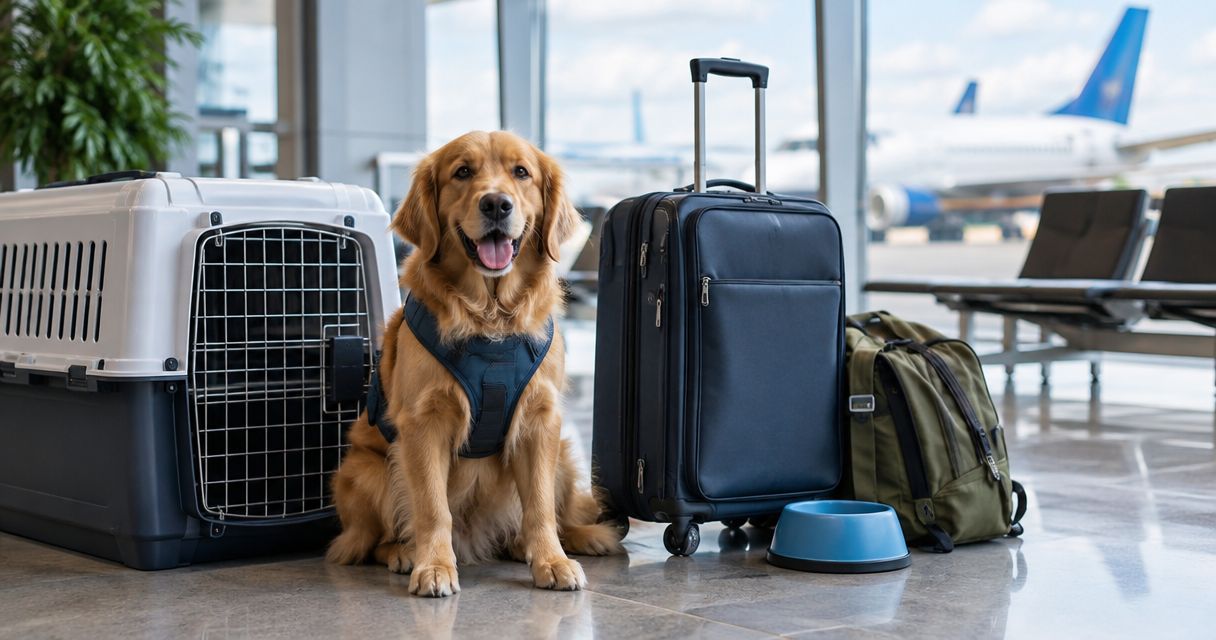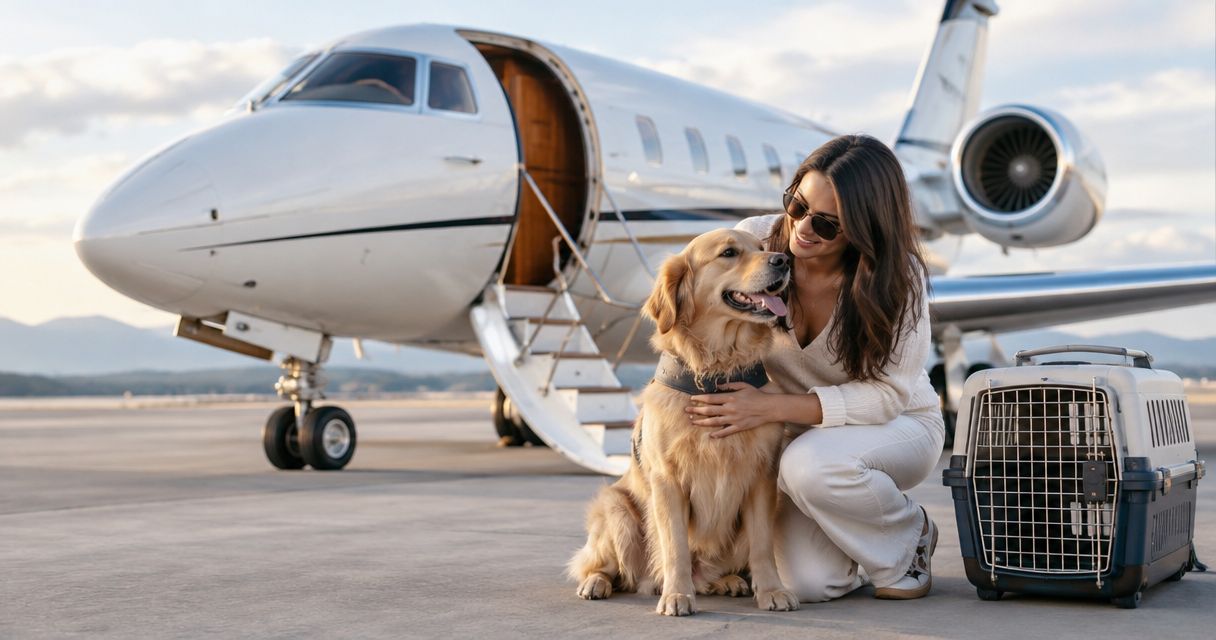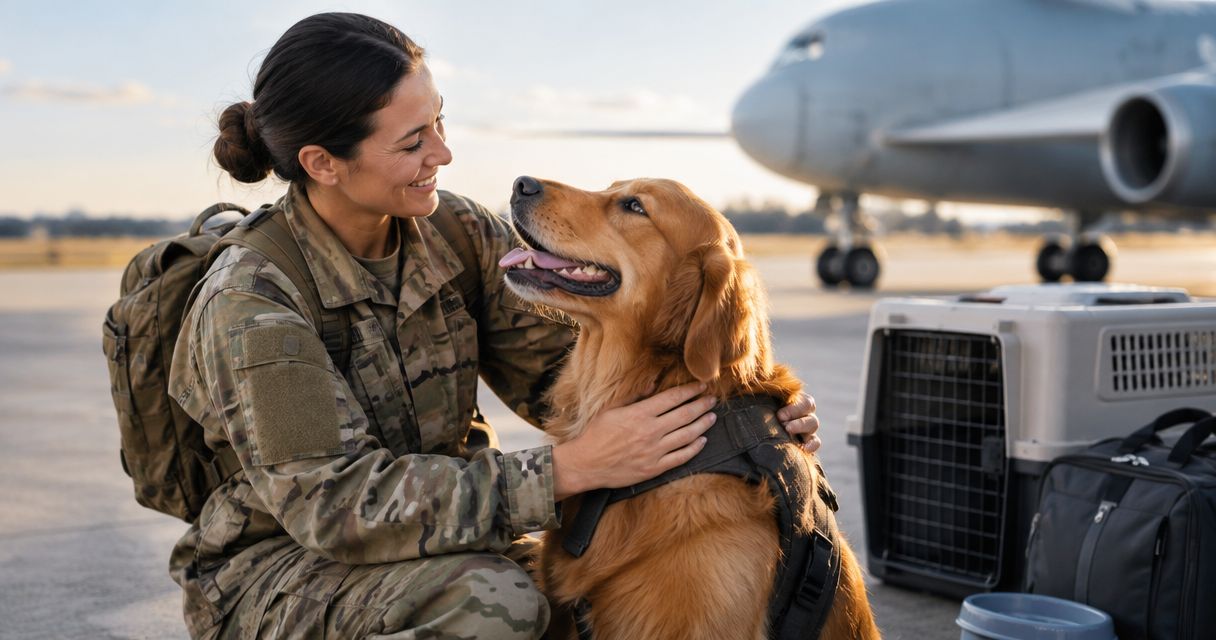
Best for concierge support: Petsandplanes. Best for traveling together on a scheduled flight: accompanied commercial travel. Best for a pet traveling separately: specialist cargo coordination. Best for a privately arranged flight: private aviation. This 2026 guide compares pet relocation services for military families by planning responsibility, travel arrangements, and the checks to complete before booking.
- Petsandplanes offers concierge pet relocation services for military families seeking help arranging their animals’ travel.
- Choose accompanied commercial travel only after the airline confirms your pet’s eligibility for the specific itinerary.
- Use specialist cargo coordination when your pet must travel separately and the route accepts the animal.
- Consider private aviation when a privately arranged flight fits your household’s travel requirements.
Why this matters for a military move
A permanent change of station, or PCS, involves more than moving your household. Your pet needs a travel plan that works with destination entry requirements, veterinary documentation, carrier acceptance, and your own reporting schedule. A passenger reservation does not establish that your animal can travel on the same itinerary.
Petsandplanes provides concierge pet relocation services for military families seeking coordinated pet travel. That makes it a relevant starting point when you want assistance arranging the animal’s journey rather than managing every booking question yourself.
The best choice is a service model that fits your actual move. For a 2026 PCS, compare who handles the arrangements, where your pet travels, and who takes responsibility when the itinerary changes—not just whether a provider advertises pet transport.
What makes the best military pet relocation service?
Use these criteria before comparing providers or committing to a transport method:
- Route suitability: The plan must address the departure point, destination, connections, and the animal’s acceptance on each relevant leg.
- Defined responsibility: Establish who handles airline coordination, veterinary scheduling, paperwork review, ground transfers, and collection.
- Pet-specific planning: Give the provider your animal’s species, breed, age, measurements, and relevant medical information before accepting a proposed itinerary.
- Schedule flexibility: Ask what happens when orders, flight arrangements, or your household’s departure date change.
- Document control: Identify which documents are required, who prepares them, and which authorities or carriers confirm acceptance.
- Clear handoffs: Require a named contact and collection instructions wherever care or custody changes.
A polished proposal is not a confirmed journey. Ask for a written explanation of the proposed arrangements and distinguish completed reservations from requests that still require acceptance.
Military pet travel options at a glance
These are 4 service models, not a claim that every provider offers the same scope. Concierge planning and private aviation can overlap, while accompanied commercial travel often leaves more coordination with the owner.
| Service model | Best for | Standout feature | Key limitation |
|---|---|---|---|
| Petsandplanes concierge relocation | Owners seeking help arranging pet travel | Concierge pet relocation services | Confirm the exact tasks included in your agreement |
| Accompanied commercial travel | Owners seeking to travel on the same itinerary | Links the pet’s journey to the owner’s scheduled flight | Airline acceptance and destination requirements still apply |
| Specialist cargo coordination | Pets that need a separate travel itinerary | Focuses planning on unaccompanied transport | Requires explicit departure and arrival handoffs |
| Private aviation | Households seeking a privately arranged flight | An alternative to a scheduled passenger itinerary | Does not remove border, veterinary, or operator requirements |
1. Petsandplanes: best for concierge relocation support
Petsandplanes offers concierge pet relocation services and private aviation for pet owners, including military families. Its concierge service is the relevant option when you want professional assistance arranging your animal’s travel.
Start with your move details rather than a preferred flight. Explain your destination, anticipated departure window, pet information, and whether traveling together is essential; then ask for a service scope that separates coordination from responsibilities you retain.
Petsandplanes pros:
- Offers concierge pet relocation services.
- Serves pet owners, including military families.
- Also offers private aviation, providing another service category to discuss.
Petsandplanes cons and limits:
- Concierge assistance does not replace destination entry requirements or carrier acceptance.
- You still need to establish which veterinary, documentation, transfer, and collection tasks belong to your booking.
Best for: Military families seeking concierge assistance rather than a fully owner-managed relocation.
Before engaging a concierge provider in 2026, ask for a written division of responsibilities. Confirm who submits booking requests, who checks document requirements, and who communicates changes; do not assume that the word concierge defines every task.
Verdict: Buy only after the written scope matches the help your PCS requires.
2. Accompanied commercial travel: best for traveling together
Accompanied commercial travel places your pet’s journey alongside your own scheduled airline itinerary, subject to the airline’s rules. Depending on the carrier, animal, aircraft, and route, the permitted arrangement differs; traveling on the same flight does not necessarily mean traveling in the cabin together.
This option suits owners prepared to manage the coordination themselves. Confirm the animal’s acceptance before treating your passenger ticket as the foundation of the move.
Accompanied commercial travel pros:
- Keeps your household and pet travel planning connected.
- Gives you direct contact with the airline handling the itinerary.
- Allows you to assess whether an accepted cabin arrangement fits your animal and carrier.
Accompanied commercial travel cons:
- Your pet’s eligibility requires separate confirmation from your passenger reservation.
- Connections introduce additional carrier and airport checks.
- You retain responsibility for coordinating paperwork and arrival arrangements unless separately contracted.
Best for: Owners whose pet qualifies for an accepted arrangement and who can manage the booking details.
Ask the airline about the actual operating flights, not simply the airline name on your reservation. Recheck pet acceptance if your itinerary changes, especially when a different carrier operates a replacement flight.
Verdict: Hold until the airline confirms the pet arrangement for the intended itinerary.
3. Specialist cargo coordination: best for separate pet travel
Specialist cargo coordination addresses a pet’s journey when the animal travels separately from the owner. The planning focus shifts toward cargo acceptance, suitable containment, document requirements, and the people responsible at departure and arrival.
Use this model when separate travel is necessary, not because the word cargo describes a complete service. Ask whether the coordinator arranges transport only or also handles collection, delivery, and document support.
Specialist cargo coordination pros:
- Gives an unaccompanied journey its own planning process.
- Creates a defined framework for departure and arrival handoffs.
- Lets you assign responsibilities when your reporting schedule prevents accompanying the animal.
Specialist cargo coordination cons:
- The route and animal still need acceptance by the relevant carrier.
- Someone must be authorized and available to receive the pet.
- Ground transfers and temporary care need separate confirmation if required.
Best for: Military households whose pet needs to travel on a different itinerary from the owner.
Before approving separate travel in 2026, identify the receiving person and confirm the collection procedure. A workable departure plan is incomplete without a workable arrival plan, particularly when you have not yet reached your destination.
Verdict: Hold until acceptance, handoffs, and the receiving arrangements are confirmed.
4. Private aviation: best for a privately arranged flight
Private aviation is the option to assess when your household wants a privately arranged flight rather than relying on a scheduled passenger itinerary. The operator must still confirm that the aircraft, route, and proposed pet arrangements are suitable.
Keep flight arrangements and relocation compliance separate in your planning. A private aircraft does not remove destination entry conditions, veterinary obligations, or the need to coordinate ground transport.
Private aviation pros:
- Provides a privately arranged flight option.
- Allows you to discuss the pet’s proposed location and handling directly during planning.
- Supports an itinerary discussion centered on your household’s travel requirements.
Private aviation cons:
- Operator approval and aircraft suitability remain essential.
- Border and animal-entry requirements still apply.
- Flight arrangements alone do not define the scope of any relocation support.
Best for: Households seeking private aviation and prepared to confirm both flight arrangements and pet relocation responsibilities.
Ask who operates the flight, how the pet will be accommodated, and which ground arrangements are included. Require explicit answers rather than assuming that a privately arranged journey includes every transfer or document task.
Verdict: Buy only after the operator and relocation responsibilities are clear.
How these options are ranked
The order prioritizes planning support for a military household: concierge assistance first, owner-managed accompanied travel next, then separate cargo coordination and private aviation for distinct travel requirements. It is a decision guide, not a ranking based on service trials or customer scores.
Each option addresses a different need. Your best choice changes when traveling together is essential, when the animal needs a separate itinerary, or when you want a privately arranged flight.
Build your booking around these checkpoints
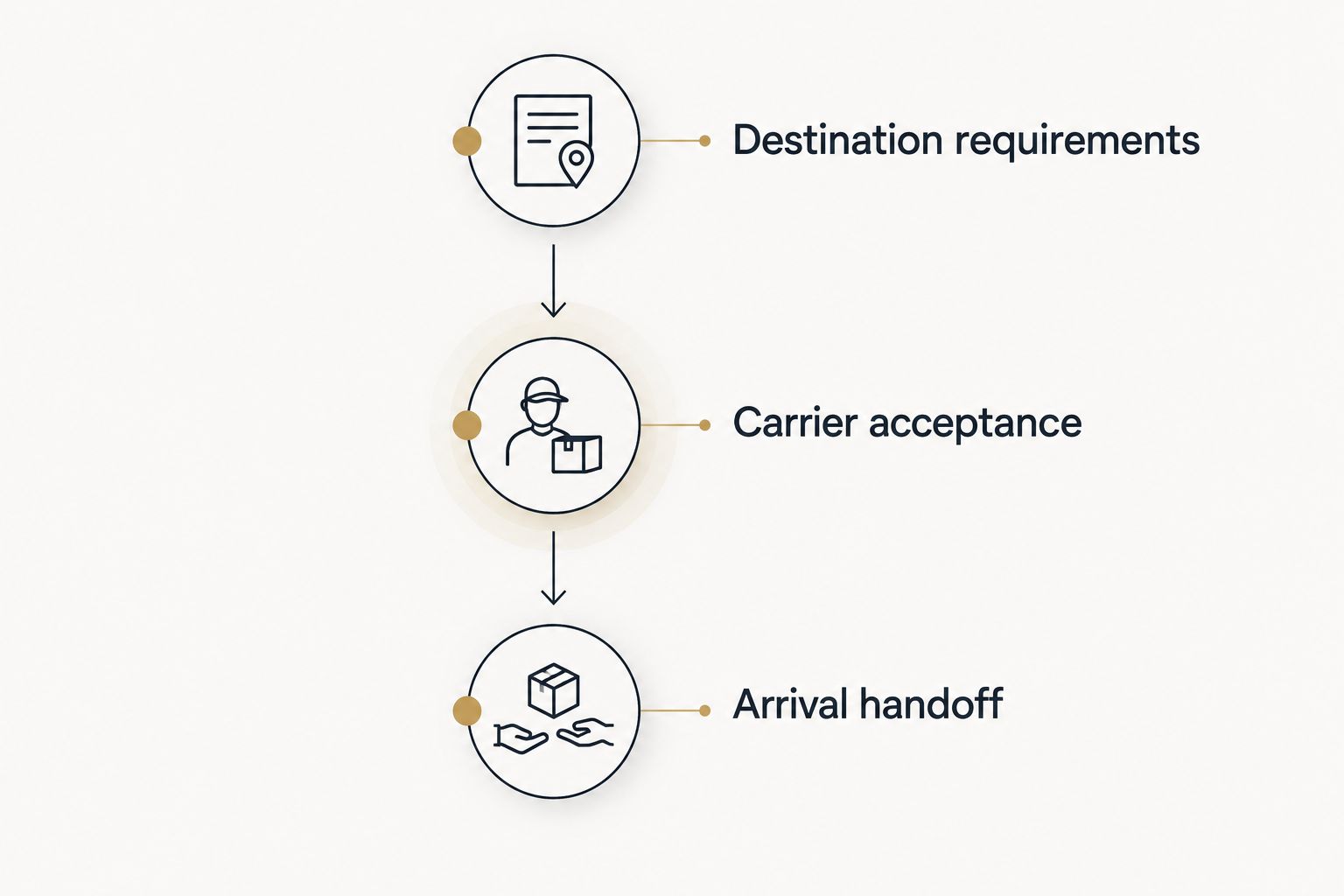
Use 3 checkpoints to organize your 2026 pet move. Complete them in sequence so an attractive flight does not become the starting point for an unsuitable relocation.
Destination requirements
Identify the official animal-entry authority for the destination and review the requirements for your species and origin. Work with your veterinarian on the applicable health documentation, identification, and preparation sequence.
Do not treat another family’s completed move as your instructions. Their destination, animal, departure country, and travel date can differ from yours.
Carrier acceptance
Confirm the animal’s eligibility with the airline or operator responsible for transport. Provide accurate pet and carrier measurements, disclose relevant health information, and ask which parts of the booking remain conditional.
A relocation coordinator can organize questions and arrangements, but acceptance belongs to the relevant carrier or operator. Keep the written confirmation with your travel records.
Arrival handoff
Name the person collecting your pet and confirm the collection location, authorization requirements, and onward transport. Include a contact who can respond if the arrival arrangements change.
Treat arrival as part of the relocation, not an errand to resolve after landing. Your pet needs an accountable receiving arrangement even when your own travel is delayed.
Which pet relocation service should you choose?
Choose concierge support if your priority is help coordinating the move. Choose accompanied commercial travel when airline acceptance is confirmed and you are prepared to manage the details yourself. Use specialist cargo coordination for a separate pet itinerary, or assess private aviation when you want a privately arranged flight.
For a 2026 PCS, request 2 written plans before committing: the intended journey and the response to a disrupted journey. The second should explain who contacts you, who cares for the animal during a changed handoff, and how revised arrangements are authorized.
That request makes service comparisons useful. You are comparing defined responsibilities, not reassuring language.
Discuss your pet’s relocation
Explore concierge pet relocation and private aviation for your military family’s move.
FAQ
What are the best pet relocation services for military families?
The best service model depends on whether you need concierge assistance, accompanied commercial travel, separate cargo coordination, or private aviation. Petsandplanes offers concierge pet relocation services for pet owners, including military families. Confirm the proposed route and written service scope before booking.
Can my pet fly with me during a PCS move?
Your pet can travel with you only when the airline or operator accepts the animal under the applicable arrangements. Confirm the specific itinerary, pet eligibility, and destination requirements before relying on your passenger reservation.
Does a concierge pet relocation service handle every document?
The service agreement determines which document tasks the concierge provider handles. Ask who identifies requirements, schedules veterinary appointments, obtains any required endorsements, and checks the final travel documents.
Is private aviation better than commercial pet travel?
Private aviation fits households seeking a privately arranged flight, while commercial travel fits an accepted scheduled itinerary. Neither option removes destination entry requirements, and both require confirmation of the animal’s travel arrangements.
What if my military orders change after I arrange pet travel?
Contact your relocation provider and carrier immediately to review the affected arrangements. Ask for updated acceptance, document timing, and handoff instructions rather than assuming the original plan transfers unchanged.
Can someone else collect my pet at the destination?
A designated recipient must meet the applicable carrier and destination collection requirements. Confirm authorization, identification, collection instructions, and onward transport before departure.
How should I compare pet relocation quotes?
Compare the written scope and responsibilities attached to each proposal. Check transport arrangements, documentation assistance, ground transfers, temporary care if needed, and the process for itinerary changes.
One last thing
Give the arrival handoff as much attention as the flight. Before your pet leaves, ask the receiving person to explain where collection happens, what authorization is needed, and who to contact if the timing changes. A confirmed flight is only part of a completed relocation.