Best overall for concierge coordination: Petsandplanes. Best for prioritizing owner-and-dog cabin travel: private aviation. Best for an owner-managed move: airline cargo, subject to acceptance. This 2026 guide compares pet air transport for large dog breeds by travel arrangement, coordination needs, and route restrictions—not unsupported provider rankings.
- Petsandplanes is best for owners seeking concierge pet relocation rather than managing each travel arrangement themselves.
- Private aviation suits owners prioritizing shared-cabin travel, subject to aircraft and operator approval.
- Airline cargo requires confirmed acceptance of your dog, travel container, route, and departure conditions.
- Choose pet air transport for large dog breeds by confirmed travel conditions, not breed name alone.
Why this matters
A large dog's journey depends on more than finding a flight. The airline or aircraft operator must accept the animal and its travel arrangement, while the destination sets its own entry requirements.
Choose the transport arrangement before committing to your own itinerary. A passenger booking does not establish that your dog can travel on the same departure, through the same connection, or under the same booking process.
For a 2026 move, separate your priorities into two questions: must you travel in the same cabin, and do you want someone coordinating the relocation? Those answers narrow the field more effectively than a general list of pet shipping companies.
What makes the best large-dog air transport service?
Use these criteria before comparing providers or requesting proposals:
- Confirmed acceptance: The plan must address your dog's breed, health, measurements, and travel container—not simply say that pets are welcome.
- Travel arrangement: Establish whether your dog travels in the cabin, as checked baggage, or through a cargo booking.
- Route suitability: Review every operating carrier, transfer, and destination requirement. Approval for one segment does not establish approval for another.
- Coordination scope: Identify who handles airline communication, veterinary scheduling, documentation, ground transport, and arrival arrangements.
- Exception handling: Ask what happens after an aircraft change, weather restriction, missed connection, or rejected document.
- Written responsibilities: Distinguish confirmed services from tasks you retain. A reassuring conversation is not a substitute for a clear booking agreement.
The strongest proposal answers these questions for your actual journey. A provider's general description cannot establish whether a particular aircraft or international route will accept your dog.
Large-dog air transport options at a glance
These are service models, not interchangeable products. The ranking assigns each a distinct use case; private aviation can also form part of a concierge relocation.
| Rank and option | Best for | Standout feature | Key limitation |
|---|---|---|---|
| 1. Petsandplanes concierge relocation | Owners seeking coordinated relocation support | Concierge pet relocation and private aviation services | Confirm the specific handling, paperwork, and travel responsibilities included |
| 2. Private aviation | Owners prioritizing shared-cabin travel | An aircraft arrangement that can accommodate owner-and-dog travel, subject to approval | Aircraft suitability and pet acceptance require operator confirmation |
| 3. Airline cargo booking | Owners prepared to manage a separate animal shipment | A booking process specifically for cargo transport | Carrier, container, route, and weather restrictions govern acceptance |
| 4. Accompanied checked-pet service | Owners whose airline explicitly accepts a large dog as checked baggage | Pet travel associated with the owner's passenger journey | Not a universal airline service; acceptance is itinerary-specific |
1. Petsandplanes: best for concierge pet relocation coordination
Petsandplanes provides concierge pet relocation services and private aviation for pet owners, including military families. This service model fits owners who want relocation assistance rather than taking responsibility for every separate arrangement themselves.
Petsandplanes is best for large-dog owners seeking concierge pet relocation support. The next step is to establish exactly what that support covers for your departure point, destination, and preferred travel arrangement.
A useful request describes the dog and the move together. Include breed, current measurements, health considerations, departure location, destination, and whether cabin travel with the owner is essential. Military families should also identify which travel dates and arrangements are fixed versus awaiting confirmation.
Petsandplanes pros:
- Offers concierge pet relocation services.
- Offers private aviation services.
- Serves pet owners, including military families.
Petsandplanes cons:
- A concierge engagement still requires a clear division of responsibilities between you, the provider, and your veterinarian.
- The service description alone does not establish acceptance for a particular dog, aircraft, or destination.
Best for: Owners seeking a service-led relocation arrangement, especially when coordinating the move themselves is not their preferred approach.
Verdict: Buy only after the written proposal confirms the travel arrangement and included responsibilities. Choose the agreed scope, not the label attached to it.
2. Private aviation: best for prioritizing shared-cabin travel
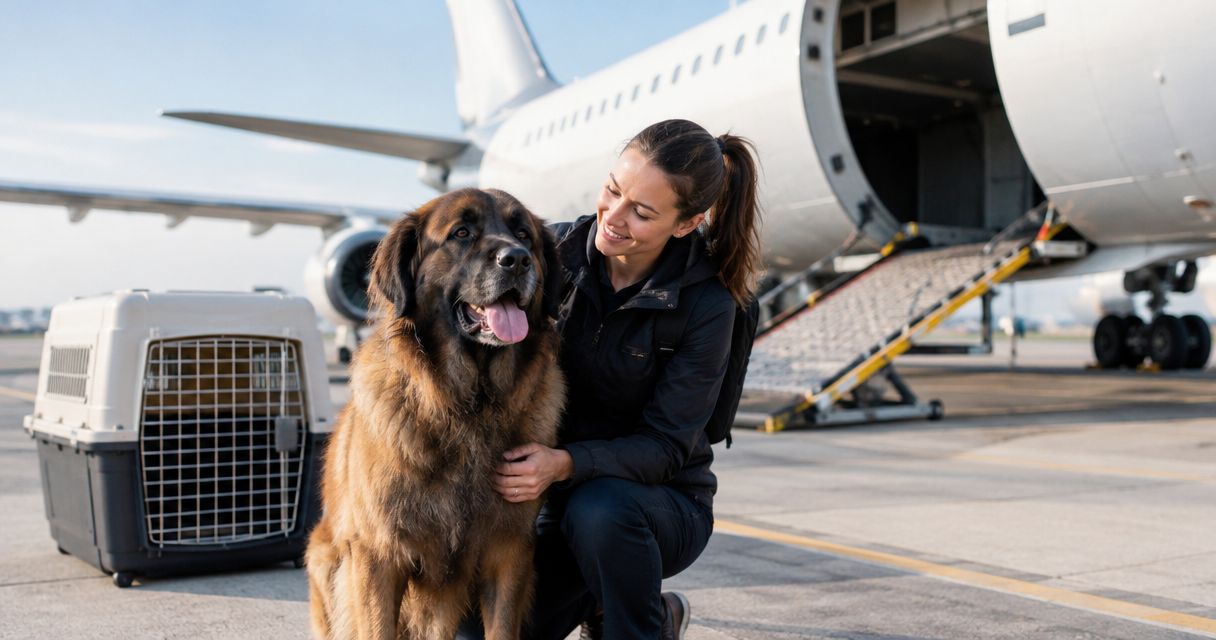
Private aviation is the relevant category when traveling alongside your large dog is a central requirement. The aircraft operator must approve the animal, cabin arrangement, and applicable restraint or containment requirements.
Start with the physical setup. Your dog needs an approved place to travel, and the operator needs accurate information about the animal before confirming suitability. A photograph of a spacious cabin does not establish that a particular dog can travel there safely or that the operator will accept it.
Private travel also does not remove border requirements. An international journey still needs the destination's applicable animal-entry documentation and arrival arrangements.
Private aviation pros:
- Supports planning around owner-and-dog travel in the same cabin when approved.
- Allows direct discussion of the dog's needs with the aircraft operator or arranging service.
- Makes aircraft suitability an explicit part of selecting the journey.
Private aviation cons:
- Cabin travel is not automatic; operator approval and aircraft suitability remain essential.
- Veterinary documentation and destination entry rules still apply.
Best for: Owners who treat shared-cabin travel as a requirement rather than a preference.
Verdict: Buy only after the operator confirms your dog's cabin arrangement in writing. For a 2026 itinerary, request confirmation against the actual aircraft arrangement rather than a general statement about pet-friendly flying.
3. Airline cargo: best for an owner-managed animal shipment
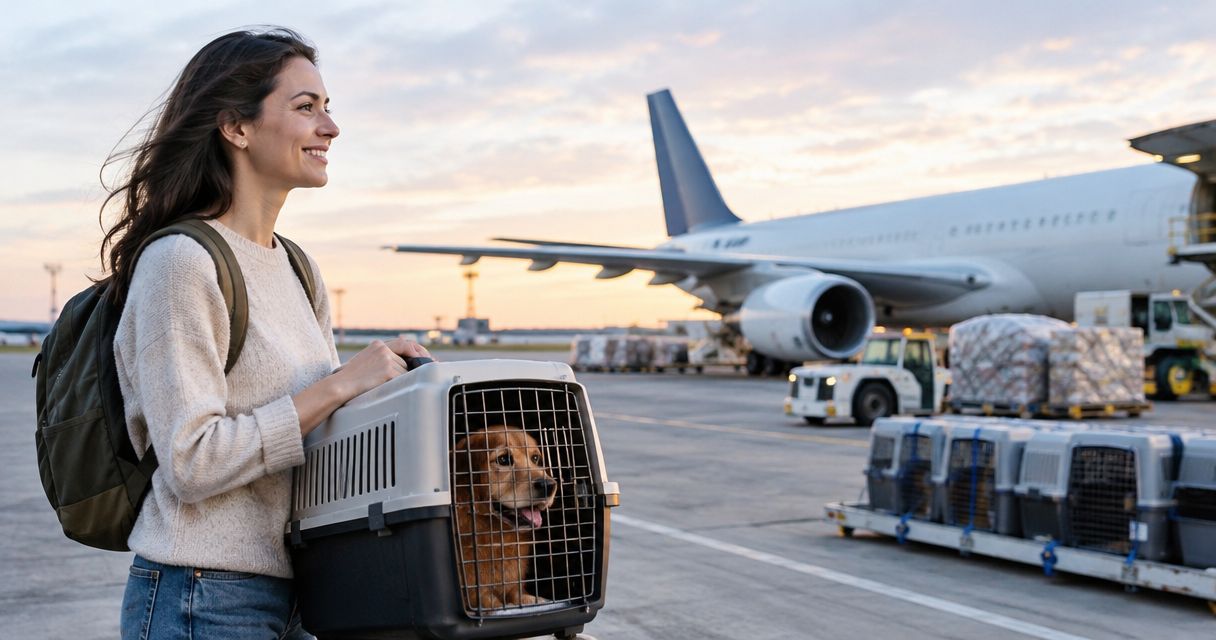
Airline cargo treats your dog's travel as a cargo shipment rather than a passenger-cabin reservation. This is a distinct booking process, with its own acceptance requirements and handover procedures.
Begin with the operating carrier's live-animal requirements. Confirm the dog's eligibility, the complete container measurements, the proposed route, and the departure and collection procedures before purchasing related travel.
A passenger itinerary is not enough. Your dog needs acceptance through the relevant animal-shipping process, and every transfer must work within that arrangement. If you prefer not to coordinate those details, compare a concierge proposal against the responsibilities of booking directly.
Airline cargo pros:
- Provides a defined process for transporting animals outside the passenger cabin.
- Separates the animal shipment from ordinary passenger-baggage assumptions.
- Lets an owner assess the carrier's specific acceptance and handover requirements directly.
Airline cargo cons:
- You do not travel beside your dog in the passenger cabin.
- Breed, container, route, and weather restrictions can prevent acceptance.
- Ground handover and collection require their own planning.
Best for: Owners willing to manage a separate shipment and work directly through the carrier's animal-transport requirements.
Verdict: Hold until the carrier confirms the dog, container, and complete route. Do not interpret a passenger reservation or a general pet policy as cargo acceptance.
4. Accompanied checked-pet service: best for an eligible passenger itinerary
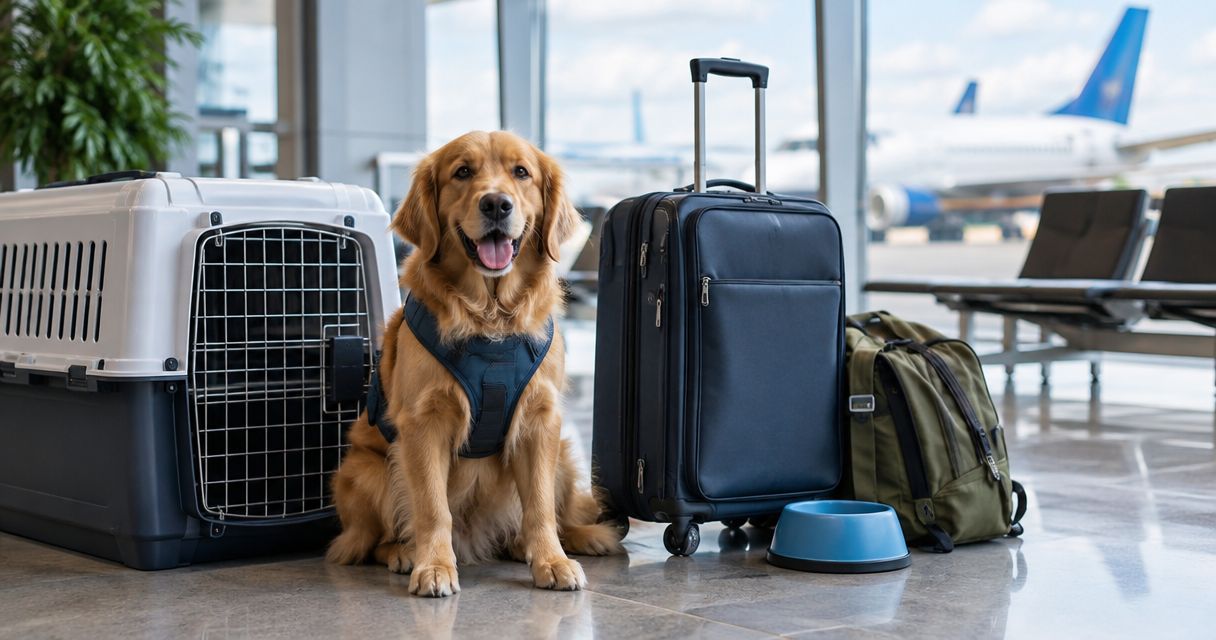
Some airlines accept animals as checked baggage under specified conditions. This option is relevant only when the operating carrier explicitly accepts your dog and container on your itinerary.
Accompanied does not mean shared cabin. Establish where your dog travels, where you hand over the container, and where you collect the animal after landing. Those details matter more than the informal description of traveling together.
For a connection, examine each segment rather than relying on the airline selling the passenger ticket. A journey involving different operating carriers needs particular attention to acceptance and transfer responsibilities.
Accompanied checked-pet service pros:
- Connects the pet's travel arrangement with an accompanying passenger journey where offered.
- Gives you a defined airline process to check against your itinerary.
- Suits owners who can meet the carrier's specific passenger-and-pet requirements.
Accompanied checked-pet service cons:
- Many itineraries do not offer an eligible checked-pet arrangement.
- Your dog does not accompany you in the passenger cabin under this service model.
- Aircraft and connection restrictions can rule out an otherwise suitable passenger flight.
Best for: Owners whose operating airline has explicitly approved accompanied checked-pet travel for their large dog.
Verdict: Wait for pet acceptance before buying the associated passenger itinerary. Treat checked-pet travel as a confirmed exception to investigate, not a default entitlement.
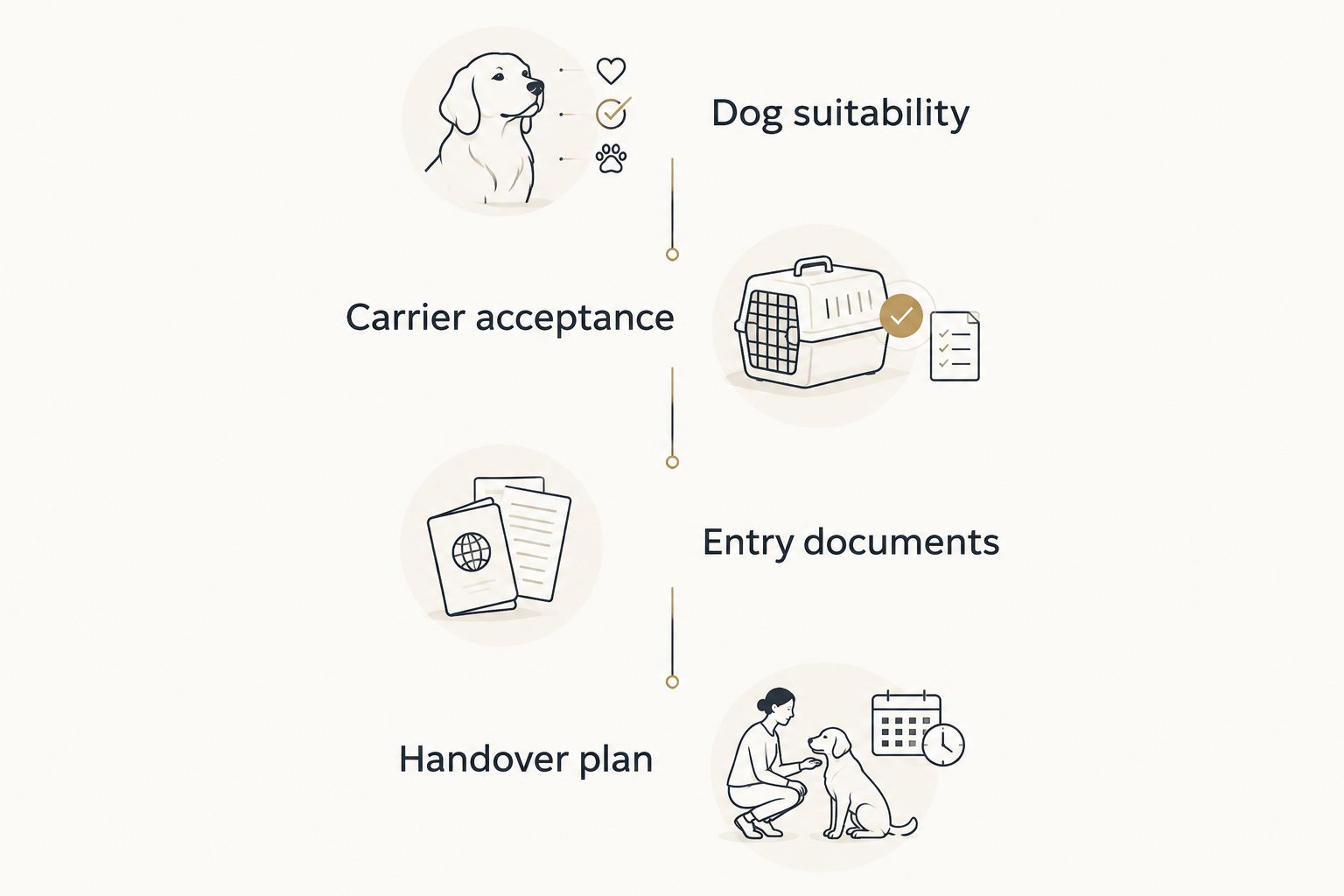
Before booking: confirm the complete journey
A sound 2026 plan connects the animal, transport arrangement, documents, and handovers. Review these elements in sequence so that an unsuitable flight does not dictate the rest of the move.
Dog suitability
Discuss fitness to travel with your veterinarian. Give the transport provider accurate breed information, health considerations, and standing measurements; weight alone does not describe the space your dog needs.
Carrier acceptance
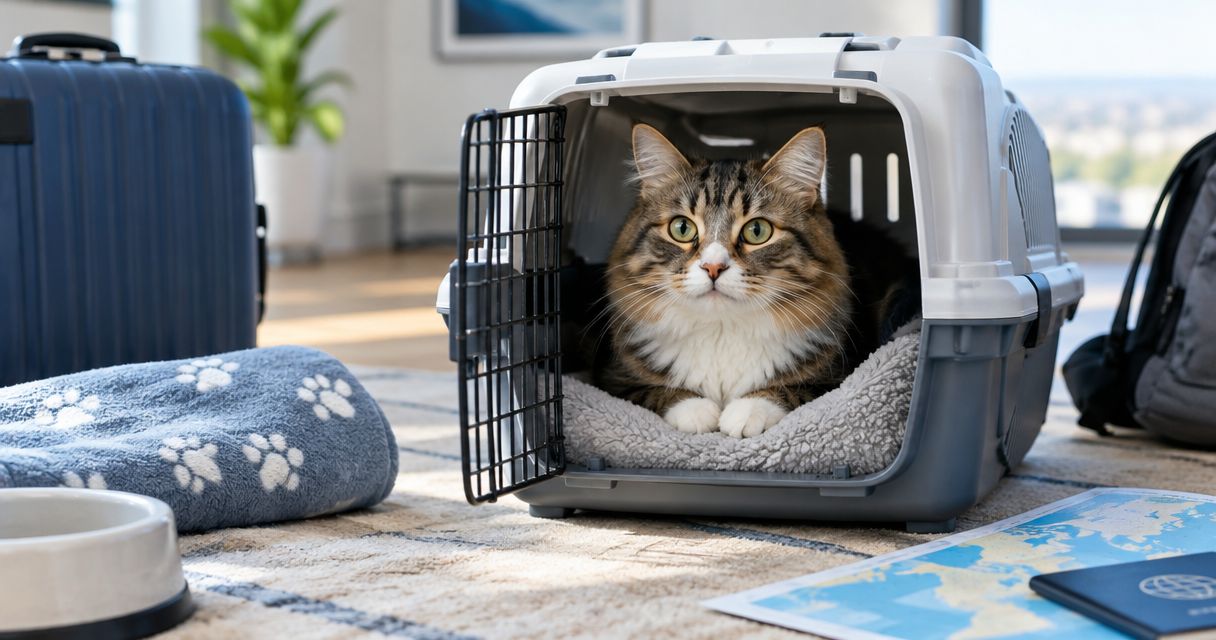
Obtain approval for the actual travel arrangement. For container-based transport, measure the dog's length and standing height, then check the complete container dimensions against the carrier's requirements. Do not choose a container from the breed name alone.
Entry documents
Check the destination's official animal-entry requirements and the departure country's export process where applicable. Arrange veterinary work around those requirements; do not assume a general health certificate satisfies every destination.
Handover plan
Identify who delivers the dog, who receives it, and how each person receives updates. Include a response plan for a changed departure or delayed arrival, particularly when your own travel prevents you from attending a handover.
For military-family moves, distinguish official travel arrangements from the pet's confirmed transport arrangement. Give the provider your constraints, but do not assume that a change to your passenger booking automatically changes the dog's booking.
Discuss your dog's relocation
Outline your route, dog's needs, and preferred travel arrangement before committing to an itinerary.
How these options are ranked
This ranking prioritizes coordination first, then separates the remaining options by the owner's main travel requirement. It is a decision guide, not a claim that one carrier accepts every large breed or serves every route.
Concierge relocation leads for owners seeking assistance. Private aviation leads for shared-cabin priorities; cargo suits a separately managed shipment; checked-pet service fits an explicitly eligible passenger itinerary. Written acceptance determines whether any option belongs on your final shortlist.
Which large-dog air transport option should you choose?
Choose concierge relocation if you want help coordinating the move. For owners who specifically require their dog beside them, investigate an approved private-aviation arrangement instead of assuming a commercial airline will offer large-dog cabin travel.
Choose airline cargo only when you accept a separate animal-shipping process and can meet its requirements. Consider accompanied checked-pet travel only after the operating carrier confirms eligibility.
In 2026, the deciding document is the confirmed travel plan: dog, route, aircraft or carrier acceptance, required paperwork, and handovers. A provider shortlist becomes useful only when those details match your move.
FAQ
What's the best pet air transport for large dog breeds?
The best arrangement depends on whether you need concierge coordination, shared-cabin travel, or a separately managed animal shipment. Choose concierge relocation for planning support and investigate private aviation when traveling beside your dog is essential.
Can a large dog fly in the cabin on a commercial airline?
A large pet dog is not automatically eligible for commercial passenger-cabin travel. Check the operating airline's rules; recognized service dogs follow a separate regulatory and acceptance framework.
Is private aviation better than airline cargo for a large dog?
Private aviation is the better fit when approved shared-cabin travel is your priority. Airline cargo is a different service model for transporting an animal outside the passenger cabin, with separate acceptance and handover procedures.
Does my dog's breed determine whether it can fly?
Breed is one acceptance factor, not the entire decision. The carrier also needs information about health, measurements, container dimensions, route, and travel conditions.
What should military families confirm before booking pet transport?
Military families should confirm the pet's transport arrangement separately from their own travel arrangements. Identify fixed dates, pending changes, documentation responsibilities, and who will handle departure and arrival.
Does private pet travel remove international paperwork requirements?
Private pet travel does not remove destination animal-entry requirements. Confirm the applicable documents and arrival procedures for the country receiving your dog.
Should I book my own flight before arranging my large dog's transport?
Confirm your dog's transport acceptance before committing to a passenger itinerary that depends on the dog traveling with you. A passenger booking does not establish pet acceptance or a workable animal-transfer arrangement.
One last thing
Your dog's container can determine whether the route works. A dog that meets a carrier's general breed policy still needs an accepted transport arrangement, including a suitable container where required.
Send complete container dimensions with your initial inquiry—not after selecting the flight. That simple order of operations keeps the discussion focused on a journey your dog can actually take.